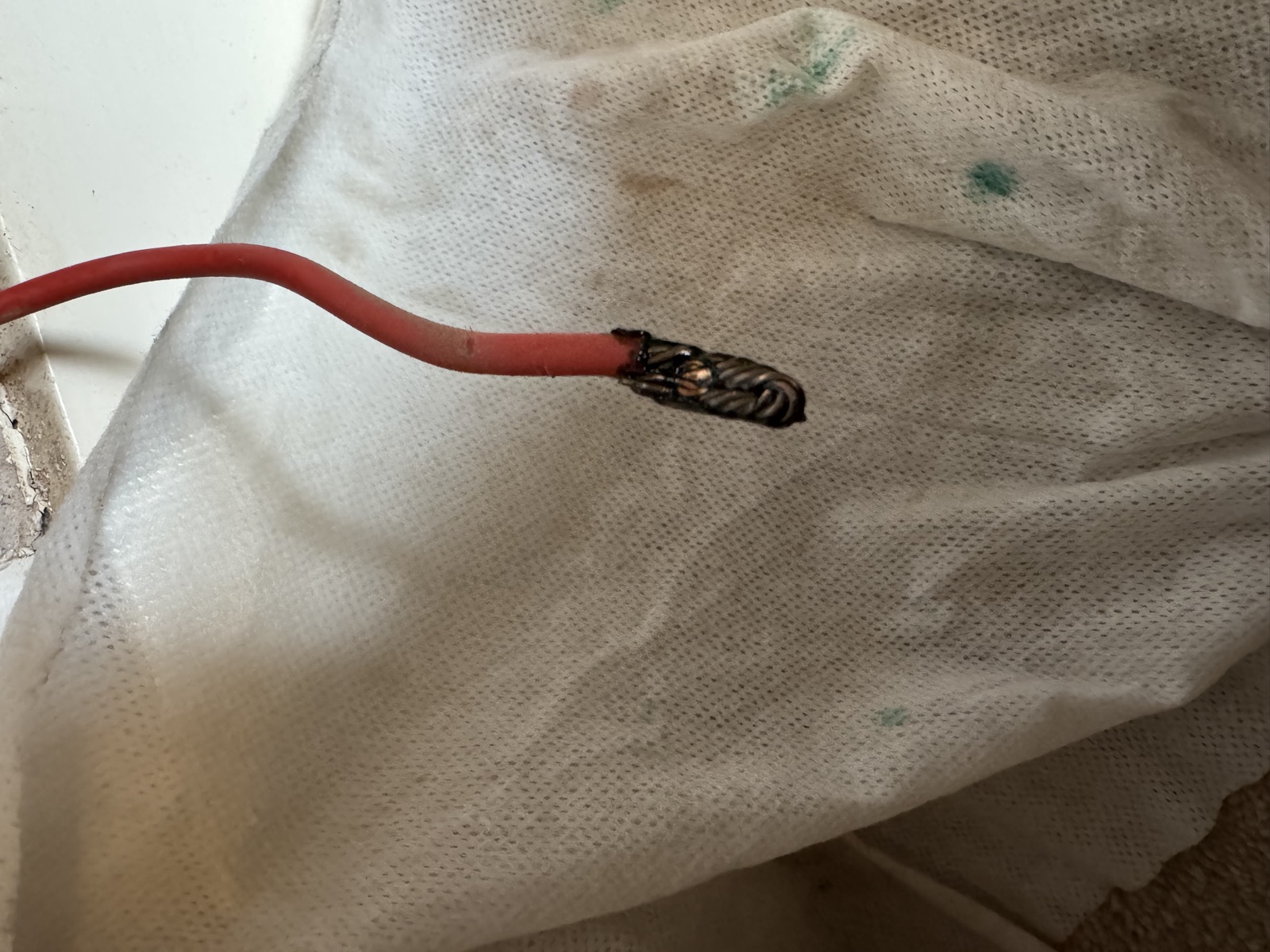
Green goo from a socket: old cable, Caversham call-out
By Derek Beckley ·
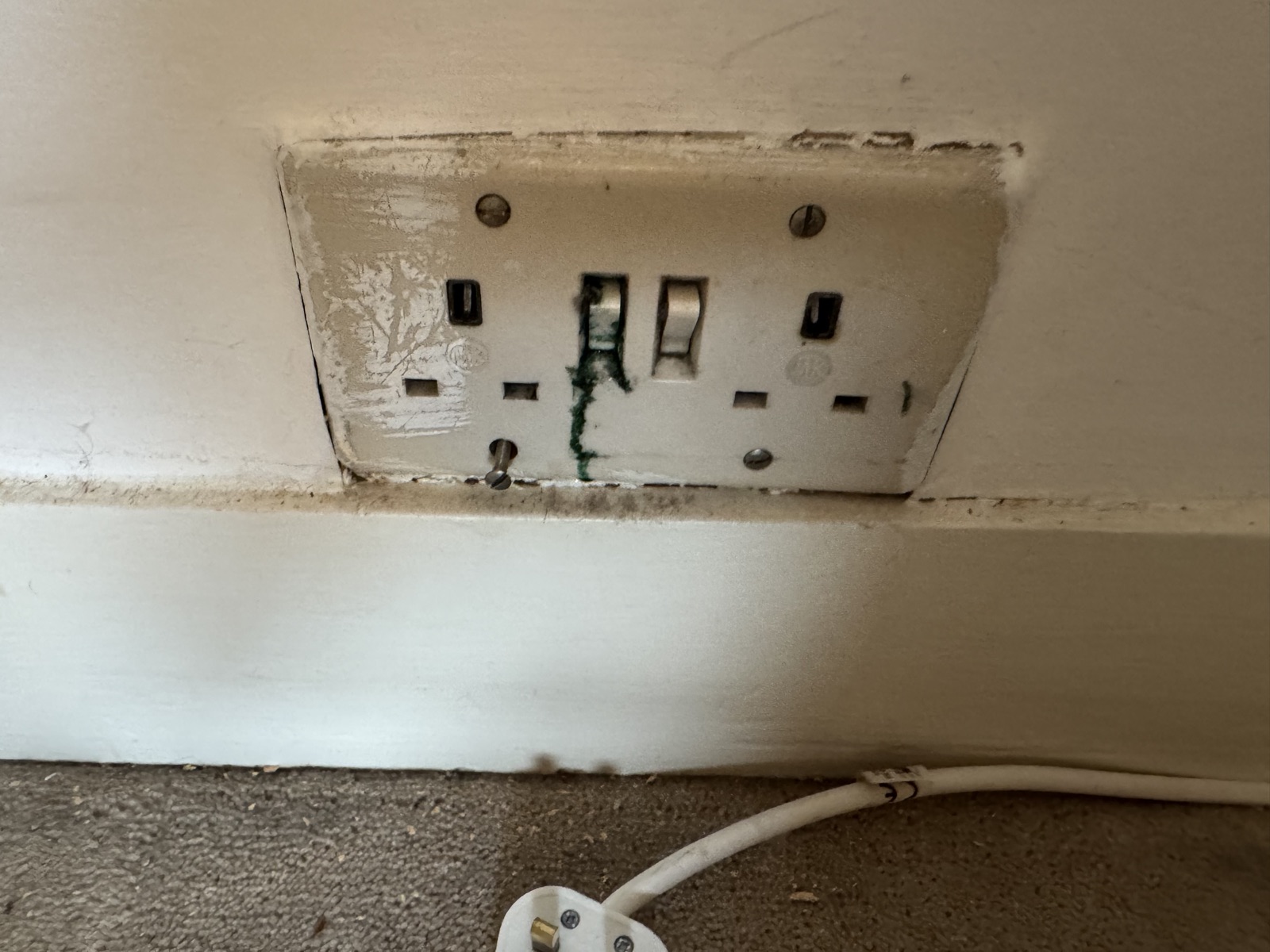
A customer in Caversham called us about something odd: a sticky green substance seeping out of a socket and running down the wall. It looked alarming, and they were right to ring rather than poke at it. The cause was the cable behind the socket, not the socket itself, and it is a fault we see in houses of a certain age across Reading.
What the green goo actually is
It is not mould, and it is not water getting in. It is a chemical reaction between the copper conductor and the plasticiser in the PVC insulation around it. Over decades, additives in the insulation break down and react with the copper to form a copper-based residue — a soft, greasy, bright green deposit that electricians call green goo or green slime.
A few facts worth knowing:
- It is strongly associated with PVC twin-and-earth cable manufactured in roughly the mid-1960s to early 1970s, when a particular anti-oxidant additive was in use. Modern cable does not do this.
- Heat accelerates it. Cables buried under loft insulation, run behind ovens, or grouped tightly in a warm airing cupboard degrade faster than the rest.
- The goo travels. It creeps along the conductor and emerges at the lowest point on the circuit, so the socket it appears at is often not where the damage started.
- It is corrosive to terminals and accessories, and it can bridge between conductors once it builds up.
Is it dangerous?
It is not an instant fire risk on its own, but it should never be ignored. The residue attacks terminal screws and brass contacts, which raises resistance at connections, and a high-resistance connection generates heat. It also damages the plastic of sockets and switches, and it stains decorations permanently.
If you find it, do not touch it with bare hands. Turn the circuit off at the consumer unit, stop using that socket, and get it looked at.
Does it mean a full rewire?
Not necessarily — and this Caversham house is a good example. We isolated the circuit, opened up the affected section, and found a single length of old cable was responsible. We then tested the rest of the installation properly: insulation resistance and continuity on every circuit, plus an inspection of accessories and cable types elsewhere in the property.
Everything else tested well, so one cable was replaced rather than the whole house. That is a very different bill from a rewire, and the customer was lucky.
The reason testing matters is that houses are rarely wired all in one go. Many Reading homes have been part-rewired over the years, so a 1968 circuit can sit alongside one installed in 2005. Only measurements tell you which is which — guessing from the age of the building does not.
What to do if you see it in your home
- Switch off the circuit at the consumer unit and leave the accessory alone.
- Do not try to wipe it away and carry on — the cable underneath is the problem.
- Ask for an electrical installation condition report (EICR) rather than a patch-up, so you know whether it is one cable or a wider issue.
Caversham, Caversham Heights, Tilehurst and much of Reading have plenty of housing from exactly the era this cable came from, so we come across it regularly. If you have spotted green residue at a socket or switch, or you are unsure how old your wiring is, get in touch with Beckley Electrical and we will test before we recommend anything.