Adding an Extra Socket Neatly: A Caversham Job
By Derek Beckley ·
Most homes never seem to have enough sockets. Maybe you've got an extension lead trailing behind the sofa, or a desk corner where nothing reaches. Adding an extra socket is one of the most common jobs we do around Reading. A lot of homeowners hold off because they picture a wall full of dust, torn wallpaper and weeks of redecorating.
It doesn't have to be like that. We recently added an extra socket for a customer in Caversham, and the photos show how neatly it can be done on a wall that's already decorated.
The job in Caversham
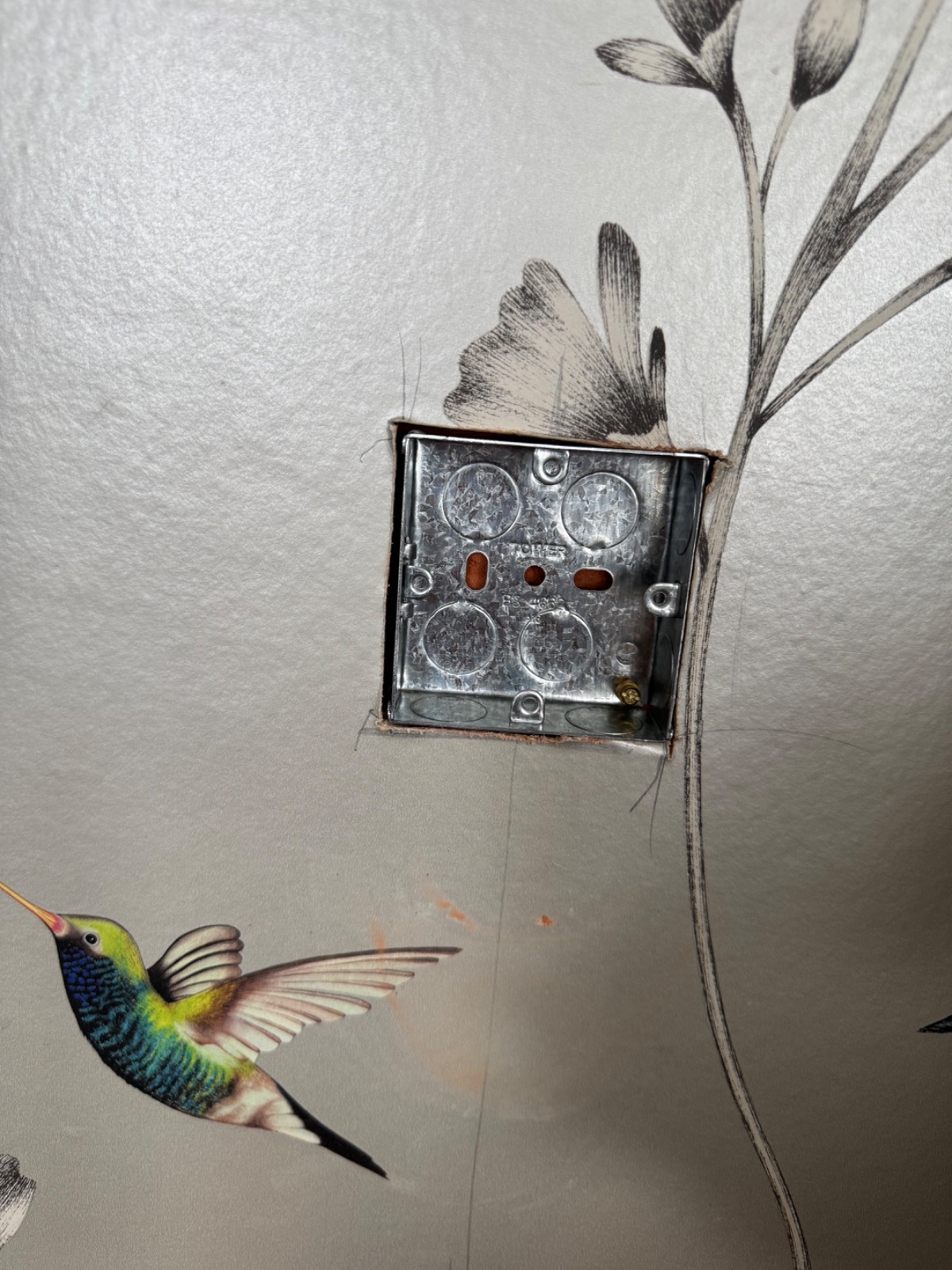
The customer wanted another single socket on a wallpapered wall. Wallpaper is the tricky part of this kind of job. When you cut into plaster behind paper, the paper round the hole can tear or peel away and leave a ragged edge that no faceplate will hide.
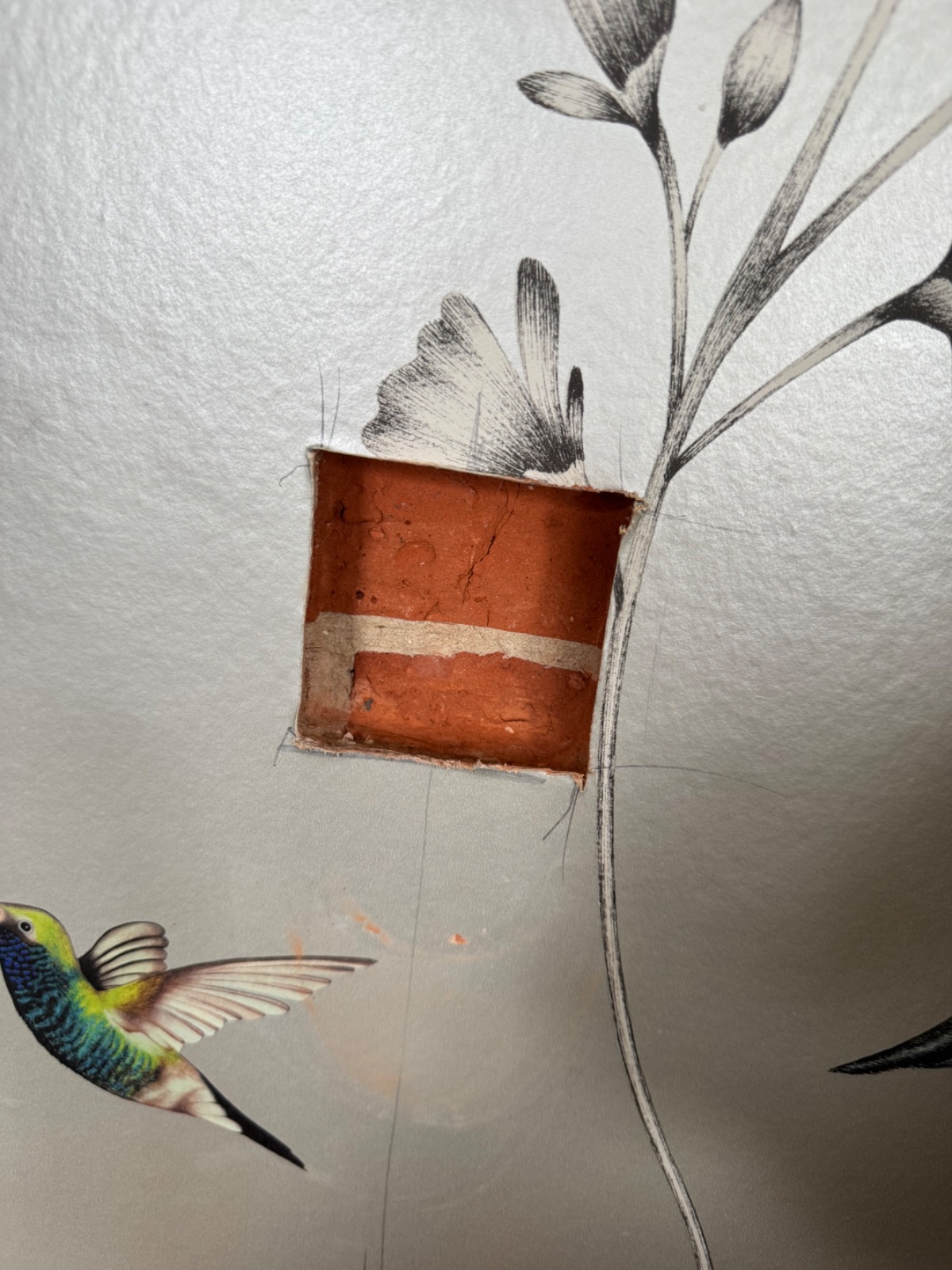
You can see in the first photo how cleanly the wall was cut out for the new back box. We took care over the cut, and that care saved the wallpaper round the socket from coming away. Once the faceplate went on, the finish looked like the socket had always been there.
How an extra socket gets into a wall
Every home is different, but the process usually runs like this:
- Plan the route. We find a suitable existing circuit to take the new socket from. We check that it can take the extra load and that the cable can run somewhere safe.
- Check for hidden services. Before any cutting, we scan for pipes and cables in the wall.
- Mark and score the outline. We mark the back box position precisely. On papered walls, we score through the paper with a sharp blade first so it doesn't tear when the plaster is cut.
- Cut the opening. We cut the plaster to the box size, no bigger. A tight opening means less making good afterwards.
- Run the cable. Where we can, we feed the cable through voids, under floors or down from above to keep chasing to a minimum. Any cable buried in the wall goes in the permitted safe zones.
- Fit, connect and test. We fix the back box, connect the socket and test the circuit before we sign the work off.
Why the right tools and experience matter
A neat cut-out isn't luck. It comes down to sharp tools, the right drill bits and cutters for the wall type, and knowing how plaster behaves as you work. Older Caversham and Reading homes often have lime plaster or lath and plaster. These crumble far more easily than modern plasterboard, so they need a gentler approach.
Experience also shows in the planning. If we choose the cable route well, you may get no visible chasing at all. That can be the difference between a job that's finished the same day and one that needs a decorator afterwards.
Is it safe to add a socket yourself?
We'd advise against it. The new socket has to connect to a circuit that's suitable for it. It must have the right protection, including RCD protection for sockets. The work must also be tested properly once it's done. A socket that looks fine can still be unsafe if the circuit behind it is overloaded or incorrectly connected. Having a qualified electrician do the work means it's done correctly and certified.
Need an extra socket in your home?
If you're tired of extension leads, or you're rearranging a room and need power somewhere new, we're happy to help. Beckley Electrical is a family-run electrician based in Tilehurst. We cover Caversham, Reading and the surrounding villages, and we take the same care with your walls that we took on this job. Get in touch for a friendly chat and a quote.